browse our free publications pages - now available - let us know if you want your work to be available on our site.
The Archaeology Free Press makes available to a broad readership works that might otherwise not be published or promulgated. Digital documents sought for consideration include, but are not limited to: annotated site reports, radiocarbon summaries, thesis and dissertation works, poster session materials, relevant photographic image compilations, previously unpublished journal articles, artifact collection/assemblage images, field notes from seminal excavations, and other kinds of documents, data, or information that might otherwise not be published in the traditional media. This page provides useful information for anyone who wants to contribute their work.
Copyright Considerations
Please consider sharing your work with other researchers!
Notes for Contributors
“The Congress shall have Power ... To promote the Progress of Science and useful Arts, by securing for limited Times to Authors and Inventors the exclusive Right to their respective Writings and Discoveries.” - United States Constitution, Article I, Section 8, Clause 8
We urge contributors to consider copyrighting their works, either through registration with the US Copyright Office (https://www.copyright.gov/) or by implementing Creative Commons (CC) Licenses. (https://creativecommons.org/implement/)
Artificial Intelligence (AI)
If you used AI tools to help create your work, let our users and readers know when you used them. This practice not only builds audience trust but also helps us and you comply with ethical standards and emerging regulations. When you make your contribution available online, it is available worldwide, and some places already have, or soon will have, regulations on disclosing your use of AI that you must follow. AI disclaimers focus on transparency, informing your audience when you used AI technology in the content creation process, and what you can and cannot rely on the output for. We strongly advise our contributors to employ AI disclosures when appropriate.
How should users cite your work?
When we upload your work to our website, we will include appropriate online bibliographical references regarding the work. However, we encourage you to include, within your work, how you want others to reference and cite the work. For example, if we provide a copy of a poster you presented at a conference, please ensure that the name of the conference, conference location and dates, and all co-authors and contributors are identified within the poster/document itself.
Instructions for Presentations
Presentations, most often PowerPoint decks, require special considerations. The medium differs from a published or unpublished paper because presenters generally communicate much of the content verbally. To address this potential information gap, we recommend that contributors record their presentations as if they were presenting to an audience and submit them to our site as WMV or MP4 files. Alternatively, consider using a speech-to-text tool to create a transcription to accompany your visual presentation.
It is important to add citations and references in your PowerPoint/presentation:
It signifies that you have tried to research and support your information with credible sources;
Cited references are also essential to avoid plagiarism;
Citing references in your presentation highlights the extent of your research, and
including references can help your readers further explore your topic.
Different formatting styles exist; however, APA is one of the most common and is typically used in research documents. APA formatting for PowerPoint mainly involves crediting sources with in-text citations and a reference list at the end of the presentation.
Disclaimer: The contents of all materials made available in the Archaeology Free Press archive reflect the work, views, interpretations, and conclusions of the contributing author(s). Responsibility for the veracity of any information contained in materials accepted for inclusion in the Archaeology Free Press archive lies solely with the authors/submitters. If you need technical guidance on obtaining copyrights, generating AI disclosures, preparing presentations for upload, etc., we can provide some direction, with the understanding that such guidance does not make us legally liable for your final product.
Notes for Contributors

Support our efforts with a donation
Contact
info@archaeologyfreepress.org
© 2026. All rights reserved.
The Archaeology Free Press, 501(c)(3) tax-exempt organization associated with Egghead Media (www.Egghead.media)
WEB Support
support@archaeologyfreepress.org
Webmaster: Judith Paulos jypaulos@archaeologyfreepress.org
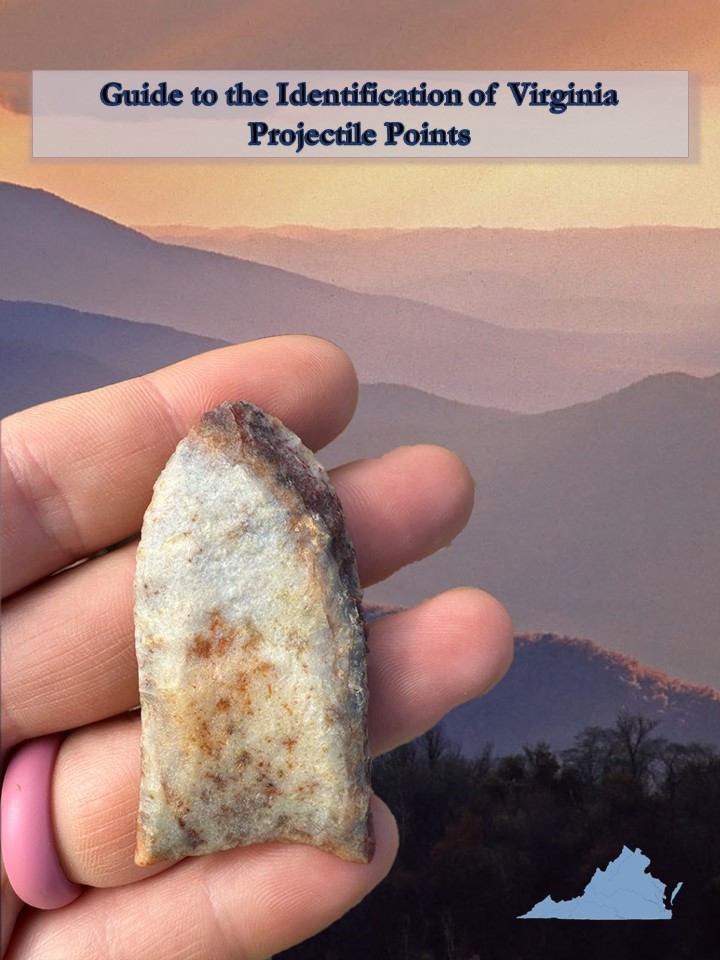
© DCR-DNH, Gary P. Fleming
Webmaster:JyPaulos
Data from this site are meant to be used responsibly, in accordance with principles of archaeological ethics and scholarship. If you use information from this site, we ask that you acknowledge the source.